



Try the #1 software for $1/month.
Norem ipsum dolor sit amet, consectetur adipiscing elit. Etiam eu turpis molestie, dictum est a, mattis tellus. Sed dignissim, metus nec accumsan.

HYROX

If you’ve ever flown into a high-altitude area like Denver, Salt Lake City, or Mexico City, you probably know the feeling. Even walking up a single flight of stairs feels different. Your legs are fine. Your lungs are not. And that’s exactly why HYROX altitude training is a key factor for upcoming races on the HYROX schedule.
That gap between how fit you are and how fit you feel is altitude. And it catches a lot of racers off guard. They’ve trained for months and are physically ready. But if they overlook the air they’ll be breathing on race day, it can become a significant disadvantage.
HYROX has recently been adding races in high-altitude cities like Salt Lake City (4,300 feet), Mexico City (7,349 feet), and Denver (5,280 feet). If one of these races is on your calendar, or your gym has members heading to one, it’s worth understanding HYROX altitude training ahead of time.
Altitude training refers to any exercise done above roughly 4,900 feet (1,500 meters). That’s the point where the drop in air pressure starts to meaningfully reduce how much oxygen makes it into your bloodstream with each breath. At that point, the air still has about 21 percent oxygen in it, but there’s just less pressure pushing it into your lungs at elevation. So your body pulls in fewer oxygen molecules per breath than it would at sea level.
Your body reacts with a higher resting heart rate and breathing rate, and sleep gets lighter for the first several nights. Your cardiovascular system works harder to deliver the same amount of oxygen it did back home without even trying.
Given enough time (usually 3-6 weeks), the body adapts to altitude. Exposure to lower oxygen triggers a rise in erythropoietin, which signals bone marrow to produce more red blood cells and hemoglobin, the oxygen carriers in blood. This adaptation is what elite endurance athletes would aim for in ideal HYROX altitude training.

The biggest difference between altitude and sea level training is that the same pace now “costs” the body more oxygen. Research on VO2 max, a measure of how much oxygen your body can use during exercise, shows a drop of roughly 1 to 2 percent for every 390 feet above 4,900 feet. So during the Mexico City HYROX race at 7,349 feet, athletes will be working with meaningfully less aerobic capacity, even though their fitness hasn’t changed at all.
During a HYROX race at altitude, this will show up specifically during the sustained aerobic output of the eight 1,000-meter run segments. The functional stations (sleds, wall balls, sandbag lunges, etc.) are shorter and more anaerobic, so they hold up better. But recovery between stations will feel slower and heart rate will be higher, even during the rest periods.
Hydration is another key factor of HYROX altitude training versus sea level. Higher altitude usually means drier air, and you lose more water through breathing than you’d expect, on top of the fluid you’re already losing to normal exercise. Combine that with a faster breathing rate and that’s how athletes can show up to the start line unusually dehydrated without feeling thirsty.
Heads Up: A common misconception is that arriving early will help. But check this out…
One other factor is timing, as cardiac output stays fairly stable for about the first 72 hours at altitude. This means that arriving 3-10 days in advance is the least ideal window. Instead, here are two reasonable options for athletes:
It’s probably not realistic to plan a multi-week trip for the race that caps off your HYROX altitude training. So the next-best plan is to fly in as close to race day as your schedule allows, ideally within a day or two. Since taking a few days to become acclimated to altitude is a common misconception, avoid arriving five days early and hoping you’ll feel better by race day.
In any HYROX race, it’s tempting to bank time early while you feel good. But especially in a high-altitude race, fatigue will tend to arrive later and harder than you expect. Therefore, run the opening kilometers at a pace slower than your sea-level pace or what you’ve done in a HYROX sim race. And let your heart rate, not the clock, tell you how the day is going.
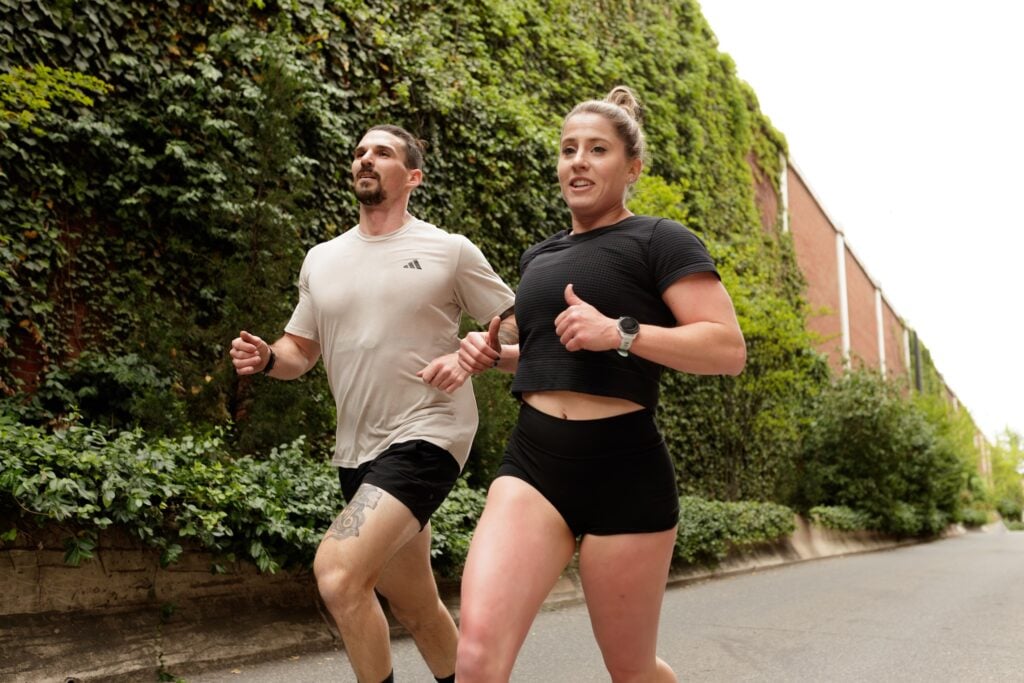
Your body needs longer to get blood flowing and breathing rate settled when there’s less oxygen to work with. A rushed warm-up at altitude leaves you racing your first station still trying to catch your breath from the walk to the corral. It’s not a bad idea to add this lengthened warmup to your HYROX altitude training weeks before you even get to the destination. That way, it’s just business as usual on race day.
HYROX athletes know that hydration is a key part of training, no matter where you’re racing. And altitude training just takes it up a notch. The key is not just the morning of the race, but be sure to hydrate the day before, and add electrolytes on top of plain water. Dry air and a faster breathing rate pull more fluid out of you than you’d lose doing the same workout at sea level.
Altitude disrupts sleep quality, and sometimes athletes don’t even notice it. And adding poor sleep to a high-altitude HYROX race at 5,000-plus feet is a rough combination. Here are just a few tips to protect your sleep before the race:
You’re already introducing altitude as a brand-new factor in your HYROX race. Don’t make it complicated by throwing in additional new factors as well. This means things like new shoes, new pre-workout, or a new fueling strategy you just read about. Altitude already adds enough variables, so keep it simple and just race with what your body already knows.
Underestimating the effects of altitude can give you a significant disadvantage on race day. The goal with your HYROX altitude training is to know what to expect, and to prepare for it. That way, you won’t mistake altitude fatigue for being unfit, and you’ll be able to race smart all the way to the finish line.
Start by understanding exactly what altitude training is, and why it differs from training at sea level. Then follow the six tips for race day above to set yourself up for your next successful HYROX race.
—
More reading:
Norem ipsum dolor sit amet, consectetur adipiscing elit. Etiam eu turpis molestie, dictum est a, mattis tellus.
Already know which provider you want to select?
Click “Sign up Now” to lock in your choice and pick your start date. It’s quick and easy!
Looking for a bit more information or guidance? Click “Talk to Us” to arrange a call with us. We’ll help you find the perfect program tailored to your needs.
Norem ipsum dolor sit amet, consectetur adipiscing elit. Etiam eu turpis molestie, dictum est a, mattis tellus.
Norem ipsum dolor sit amet, consectetur adipiscing elit. Etiam eu turpis molestie, dictum est a, mattis tellus. Sed dignissim, metus nec accumsan.
Norem ipsum dolor sit amet, consectetur adipiscing elit. Etiam eu turpis molestie, dictum est a, mattis tellus. Sed dignissim, metus nec accumsan.
We’ll let you try Wodify for yourself and get a feel for what it can do for your business. A Wodify rep — a real person — will walk you through every feature.




"Wodify transformed how we run the gym. I now have more time to focus on growing my business and helping members thrive."Dana Bradley, Owner of Westside Fitness
Click “Talk to Us” to arrange a call so we can discuss the flexible access options that best fit your facility.
Click “Book a Demo” to learn more about how Wodify can help your business grow.
Your branded app is one conversation away. Click “Talk to Us” and our team will walk you through everything you need to get started.
Click “Book a Demo” to learn more about how Wodify can help your business grow.