


Try the #1 software for $1/month.
Norem ipsum dolor sit amet, consectetur adipiscing elit. Etiam eu turpis molestie, dictum est a, mattis tellus. Sed dignissim, metus nec accumsan.

Tips

One of the biggest keys to success in HYROX is recovering while you continue to move. And although simply using a heart rate monitor won’t help you improve, training in your HYROX heart rate zones is a surefire way to get there faster.
Going out too hot—and then not being able to recover fast enough—is a common mistake for HYROX athletes. And that’s why knowing which zones matter, how to set them without overcomplicating it, and how to focus on your heart rate during race day can all be game changers.
Check out this practical guide to knowing and using your HYROX heart rate zones for optimal performance. This is where the science meets coaching, to help you perform your best on race day.
New to HYROX? Read our complete guide to HYROX for beginners. It covers what to expect, how to train, and tips for optimal performance.
Own a gym? The popularity of HYROX presents an incredible opportunity to quickly attract new members and increase revenue. Check out our guide to adding HYROX to your gym.
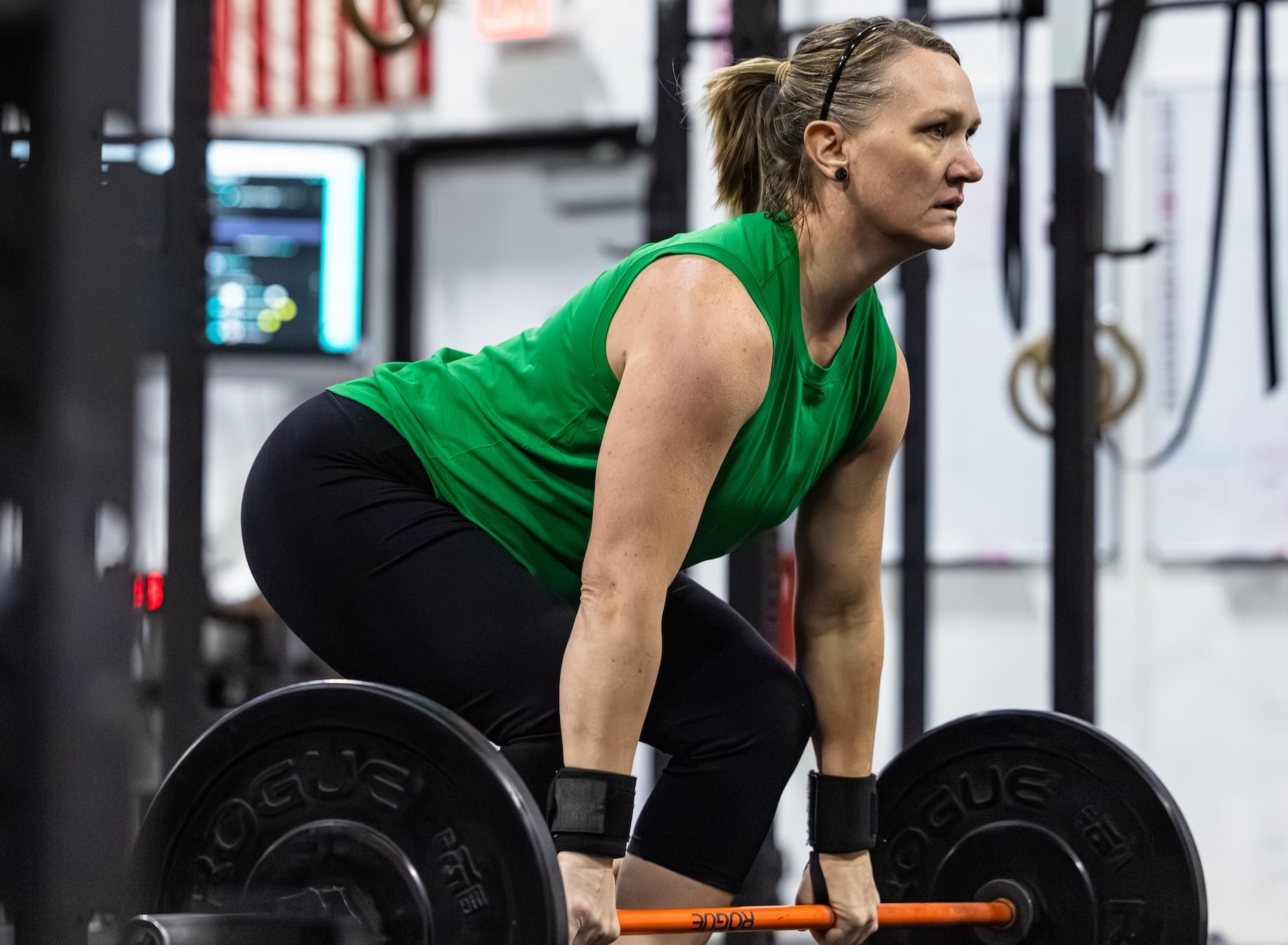
HYROX training is a cycle of heart rate spikes and settles. Stations like sleds, burpees, wall balls, and carries are designed to spike your heart rate. After that, you’ll do best by settling into the run while still being able to keep moving.
And that’s where many athletes miss the mark—they’re efficient at going hard, but not great at quick recovery afterward. As a result, the running sections of a race are inconsistent.
That’s why knowing and training your HYROX heart rates zones can help you:
Pro Tip: If you’re a fitness business owner considering adding HYROX to your training lineup, Wodify Pulse makes it easy to integrate Myzone technology into your facility!
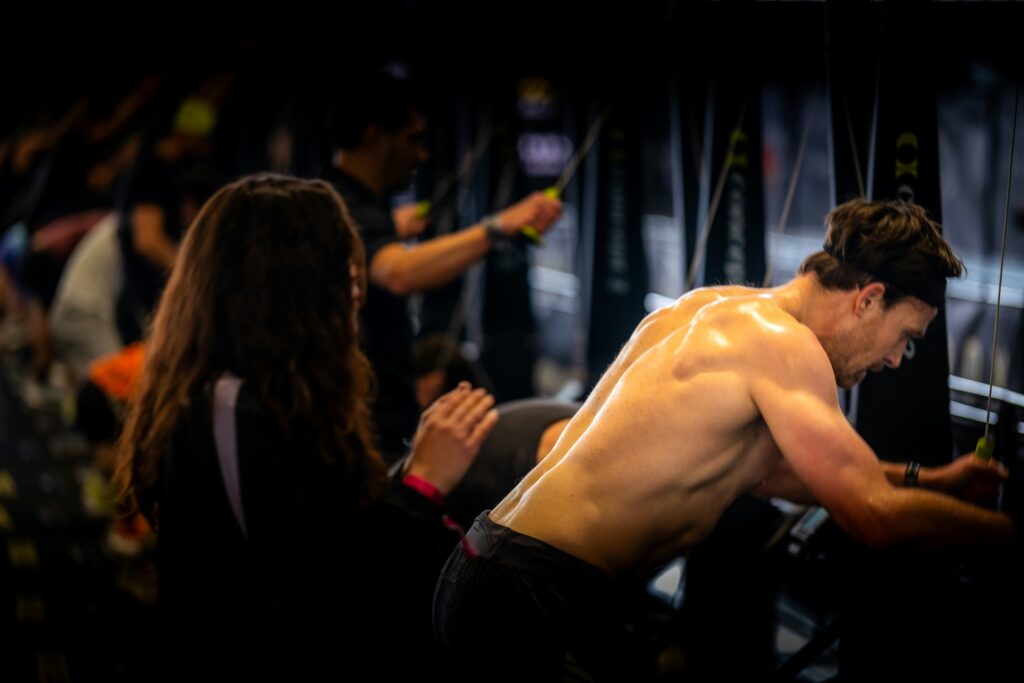
It’s easy to get analysis paralysis by researching HYROX heart rate zones, charts, and expert opinions. Instead, here’s a simple overview to help break it down:
Zone 2 is the one that builds your engine, letting you recover between spiked efforts. In this zone, you can breathe through your nose most of the time and hold a conversation. If you finished a race in zone 2, you’d have the feeling that you could keep going if you needed to.
If you’ve competed in HYROX before and fell apart later in the race, zone 2 should be your focus.
Zone 3 is slightly more intense, making you feel the fact that you’re working, but not fighting for your life to keep going. In this zone, you should still be able to talk, but just in shorter phrases.
When training, use this zone on purpose, not accidentally. Meaning, this is one of the most likely HYROX heart rate zones where athletes spend too much time each week. And while this “kinda hard” zone should show up in longer training efforts, you don’t want it to take over as the majority.
This is where your race strength comes from. Zone 4 will build your ability to work hard when you need to during the race. It will help you prevent both spiraling and crushing a station but without being able to recover afterwards.
In zone 4, you won’t be able to hold a conversation. However, the work won’t be so hard that you can’t maintain proper form or repeat a similar effort again.
One of the toughest—but uniquely motivating—things about a HYROX race is the moments that push you to zone 5. Redlining is not a sustainable zone, but training here in short bursts is extremely beneficial.

Your goal is not to avoid zone 5 completely. It’s important to be prepared with what this zone feels like for when it shows up in a HYROX race. And the better you train this zone, the easier it will be to prevent it from showing up too early on race day.
To keep it simple, think of your week as three training buckets, each one representing one or more of the HYROX heart rate zones:
Pro Tip: Most HYROX athletes spend too much time in the middle zones. Stations will spike you, so set a goal of building more in Zone 2 and adding specific Zone 4 work. This is when you can practice “spike then settle” to settle quickly on the run and keep moving at a solid pace.
On race day, it’s easy to get excited and unintentionally ditch the HYROX heart rate zones you worked so hard to dial in. You race the first 10 minutes like it’s a 10-minute workout, and then spend the remainder of the race trying to survive.
If that happens, don’t beat yourself up—it happens to even the best athletes.
Your best strategy is to try to stick to this simple, heart rate-based pacing plan:

Here are just a few helpful tips related to common mistakes, to keep you from derailing your HYROX training sessions:
Most HYROX athletes spend a lot of time in high aerobic zones with frequent spikes above that. However, heart rate zones during a race will vary by fitness, pacing, and efficiency at settling during the runs.
Training in Zone 2 is necessary, but not sufficient for competition. It builds your engine, but you will also need threshold work and HYROX-specific sessions to practice spikes and transitions.
It is recommended that HYROX athletes use both heart rate and pace during training sessions. Heart rate helps you control effort and recovery, while pace helps you build race-specific running.
Similar to any type of training, if your heart rate is usually high, check the basics. Oftentimes, it’s due to lack of sleep, increased stress, dehydration, or even caffeine consumption. If your heart rate is high without these attributes, adjust your session accordingly by going easier or shortening the length. One small pivot beats forcing a bad workout.
Thinking about HYROX for your gym? The Wodify team is here to help. Book a demo with our team today to find out more!
—
Gym owners: Want to capitalize on the HYROX hype and launch it the right way in your gym? Check out the Gym Owner’s HYROX Playbook to make sure prospective members find you, sign up, and stick around!
Norem ipsum dolor sit amet, consectetur adipiscing elit. Etiam eu turpis molestie, dictum est a, mattis tellus.
Already know which provider you want to select?
Click “Sign up Now” to lock in your choice and pick your start date. It’s quick and easy!
Looking for a bit more information or guidance? Click “Talk to Us” to arrange a call with us. We’ll help you find the perfect program tailored to your needs.
Norem ipsum dolor sit amet, consectetur adipiscing elit. Etiam eu turpis molestie, dictum est a, mattis tellus.
Norem ipsum dolor sit amet, consectetur adipiscing elit. Etiam eu turpis molestie, dictum est a, mattis tellus. Sed dignissim, metus nec accumsan.
Norem ipsum dolor sit amet, consectetur adipiscing elit. Etiam eu turpis molestie, dictum est a, mattis tellus. Sed dignissim, metus nec accumsan.
We’ll let you try Wodify for yourself and get a feel for what it can do for your business. A Wodify rep — a real person — will walk you through every feature.




"Wodify transformed how we run the gym. I now have more time to focus on growing my business and helping members thrive."Dana Bradley, Owner of Westside Fitness
Click “Talk to Us” to arrange a call so we can discuss the flexible access options that best fit your facility.
Click “Book a Demo” to learn more about how Wodify can help your business grow.
Your branded app is one conversation away. Click “Talk to Us” and our team will walk you through everything you need to get started.
Click “Book a Demo” to learn more about how Wodify can help your business grow.