


Try the #1 software for $1/month.
Norem ipsum dolor sit amet, consectetur adipiscing elit. Etiam eu turpis molestie, dictum est a, mattis tellus. Sed dignissim, metus nec accumsan.

Business Management

Running a fitness business already means wearing more hats than most people realize. You are managing schedules, chasing payments, supporting coaches, following up with leads, keeping clients engaged, and probably fixing something in the building before your first coffee.
Mindbody is one of the more established software platforms serving fitness studios and wellness businesses. But its scale does not necessarily make it the right fit for every fitness business.
Some fitness businesses need deeper workout and performance tracking. Others want easier class scheduling, stronger marketing automation, more responsive customer support, simpler payment processing, or software that can support multiple locations.
And sometimes, the biggest need is simple: fewer systems to manage.
This guide compares some of the best Mindbody alternatives for gyms, boutique fitness studios, and wellness businesses. We look at the key features, pricing models, online booking capabilities, client management tools, and strengths of each platform so you can find the right fit for the business you are actually building.
There is no single reason businesses consider switching gym software.
For one fitness studio, the problem may be price. For another, it may be a steeper learning curve, a complex setup, or the need to connect too many third-party tools.
For a growing gym, the problem might be that the software handles membership management but does not support the workout programming or performance tracking the team needs. A multi-location business may need better reporting across sites. An independent trainer may simply need online booking and automated reminders without paying for features they will never use.
Mindbody’s parent company, Playlist, completed its $7.5 billion merger with EGYM in March 2026. The combination brings Mindbody, ClassPass, Booker, and EGYM under the broader Playlist organization, giving fitness businesses another reason to consider when evaluating long-term software partners.
Before comparing platforms, get clear on what is slowing your business down today.
Software stacks have a way of growing quietly.
You start with a booking tool. Then you add payment processing. Next comes email marketing, a CRM, workout tracking, staff management, website tools, and perhaps another system for retail sales.
Before long, information is scattered across five or six systems.
That makes simple questions harder to answer. Who has stopped attending? Which leads never booked a trial? Did a member’s payment fail? Which classes are actually full? Which clients are making progress?
For time-starved fitness business owners, connecting all those dots becomes another manual task.
A comprehensive platform can reduce that friction by bringing more business operations into one system.
The advertised subscription price is only one part of the cost of fitness software.
When comparing Mindbody competitors, look at the complete operating cost. That can include payment processing fees, premium marketing tools, a branded mobile app, additional staff accounts, integrations, website tools, migration services, and multi-location functionality.
Credit card processing fees deserve particular attention because they grow with transaction volume.
A lower monthly software fee is not automatically cheaper if you have to buy several additional products to fill feature gaps.
The reverse is also true. A comprehensive platform may not make financial sense for a solo practitioner who needs nothing more than appointment scheduling and in-person payments.
Compare the stack you need, not just the sticker price.
A platform can offer all the features in the world and still be a poor fit if nobody wants to use it.
The onboarding process matters. So does the user-friendly interface your front desk staff, coaches, and clients interact with every day.
Consider how long common tasks take.
Can a new coach quickly learn class management? Can a client change a reservation without calling you? Can staff find payment details without digging through several screens? Can owners see important business performance metrics without building a complicated report?
An intuitive interface reduces training time and helps software disappear into the background, where it belongs.
The right gym management software depends on your specific business model. A class-based gym requires different tools than an appointment-based wellness studio. Using the wrong system can create unnecessary work for staff and friction for clients.
Boutique fitness chains have their own operational needs, including centralized reporting and tools for managing multiple locations. Before making a choice, read our guides on choosing boutique studio software and yoga and Pilates software.
These Mindbody alternatives serve different business models, which is why comparing core features matters more than searching for a single winner.
Best overall for fitness businesses that want operations and performance in one system
Wodify is a highly configurable gym software platform built around the day-to-day needs of fitness founders.
The platform brings online booking, membership management, payments, client management, lead management, reporting, workout programming, performance tracking, and marketing automation into a connected system.
That combination can be particularly useful for CrossFit and functional fitness gyms, martial arts academies, boutique fitness studios, and other fitness businesses where the client experience goes beyond reserving a class.
Clients can use the Wodify App to book classes, manage membership details, log workouts, and track progress. Owners and coaches can manage business operations while staying connected to what is happening on the gym floor.
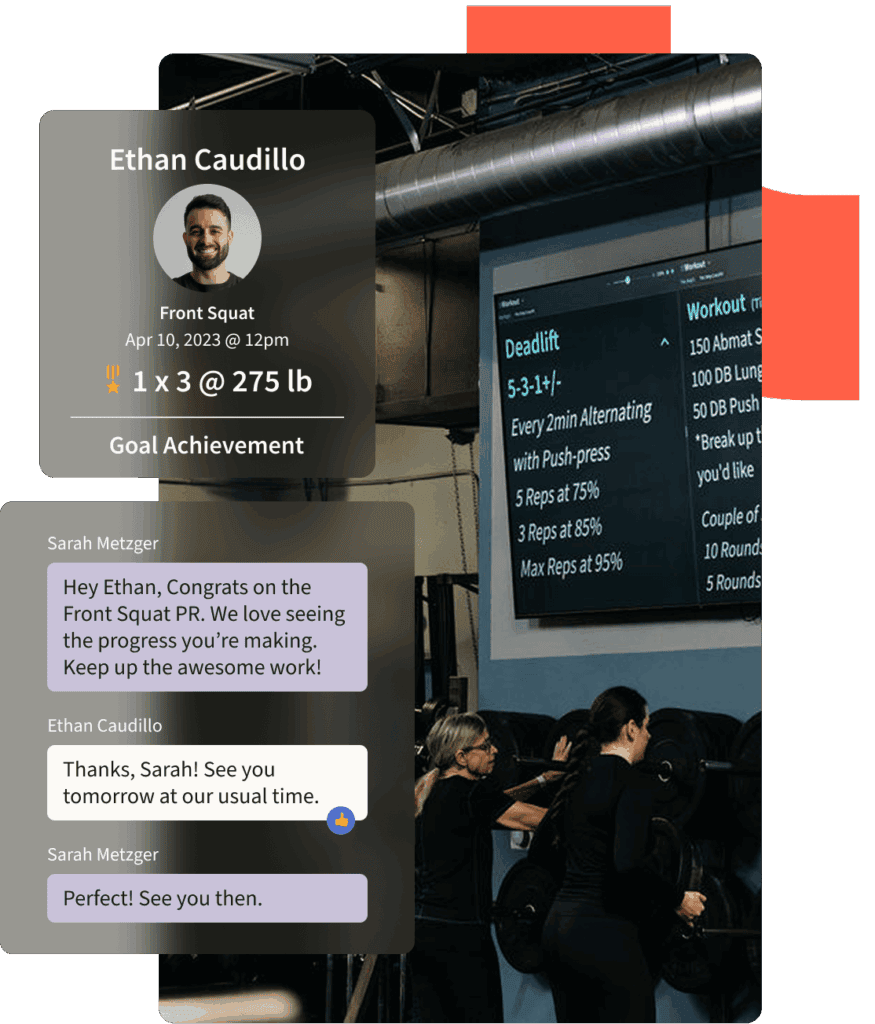
Most scheduling software can tell you that someone attended class.
Wodify can also help fitness businesses connect attendance with what happens during the workout.
Its performance tools support workout programming, result logging, progress tracking, leaderboards, and performance history. For functional fitness businesses in particular, this creates a more connected client experience.
Members are not simply booking group classes. They can see the work they have put in and the progress they are making.
That gives coaches more context, too.
Instead of managing class scheduling in one tool and performance data somewhere else, teams can keep more of the client journey connected.
For example, CrossFit Main Line has used Wodify as part of its member engagement and performance experience. Urban Fitness Oakland reported a 99% retention rate in a Wodify customer case study.
Your biggest growth opportunity is often with the clients you already have.
Wodify Retain uses client and engagement data to help identify members who may be at greater risk of leaving. That allows staff to act before a client fully disengages.
Wodify Workflows adds automation around common business processes. Fitness businesses can use workflows for lead follow-up, client communication, reminders, retention tasks, and other repetitive processes.
That is where marketing automation becomes useful in practical terms.
It is not simply about sending more email marketing. It is about making sure the person who stopped attending, requested information, or needs follow-up does not disappear because your team was too busy to reach out.
For a deeper look at retention strategy, see our client retention guide.
Wodify’s strongest fit is with fitness businesses that want more than basic class scheduling.
The platform is designed to support the broader business, including client management, billing, marketing tools, retention, workout tracking, reporting, and staff workflows.
For founders trying to simplify their stack, bringing these functions into a connected platform can reduce some of the manual tasks created by disconnected systems.
Businesses comparing the two platforms can also compare Mindbody to Wodify directly to review differences in their approaches to fitness business management.
WellnessLiving is one of the more direct Mindbody alternatives for businesses that need a broad collection of operational features.
Its platform supports class and appointment scheduling, memberships, client management, online booking, payment processing, marketing tools, and loyalty programs.
That makes it relevant to fitness and wellness businesses that want many core features under one roof.
WellnessLiving’s Starter plan is listed at $69 per month after introductory pricing. Businesses should verify current pricing and promotional terms directly before making a decision.
WellnessLiving supports online booking for classes and appointments, making it useful for businesses that operate across both models.
Its plans include different levels of marketing, lead management, rewards, loyalty, and business management features.
The rewards program may appeal to studio owners who want to connect client engagement with incentives.
For yoga studios, fitness studios, and broader wellness businesses, the platform offers a wide range of features that overlap with many of Mindbody’s core use cases.
WellnessLiving offers several pricing tiers, and available features vary between them.
A basic plan may cover essential booking functionality. Businesses that need broader marketing features, lead management, advanced loyalty capabilities, or additional client app functionality may need a higher tier.
Do not compare one provider’s basic plan against another provider’s full-feature package.
Compare the plans that contain the key features your fitness business will actually use.
Vagaro is a strong Mindbody competitor for salons, spas, barbers, and other appointment-driven businesses.
The platform combines appointment scheduling with client management, payment tools, marketing features, memberships, inventory management, and point-of-sale capabilities.
Its calendar-focused model can be particularly useful for businesses where each staff member manages an individual schedule.
Vagaro’s base pricing starts at $23.99 per month for one calendar, with additional modules and add‑ons that can increase total monthly cost.
Vagaro supports online booking and can connect businesses with clients through multiple digital channels.
For independent beauty professionals and service businesses, that can help bring discovery and appointment booking closer together.
Vagaro also supports storing cards on file, recurring charges, and payment workflows that may be useful for businesses managing memberships, appointments, or cancellation policies.
Its marketing tools include email and SMS capabilities that can support client communication and promotions.
Vagaro serves both beauty and fitness businesses, but its appointment and calendar capabilities are especially relevant to salons, spas, and wellness businesses.
A personal trainer operating mainly through individual appointments may find the platform well suited to that model.
A functional fitness gym that relies heavily on workout programming, performance tracking, leaderboards, and large volumes of group classes may place more weight on fitness-specific features available elsewhere.
The right choice depends on how your clients book, pay, train, and interact with your business.
PushPress is gym management software focused on class-based fitness businesses.
Its appeal centers on helping gym owners manage common operational workflows such as memberships, billing, class scheduling, check-ins, and related administrative tasks.
For small fitness studios or gym owners who prioritize straightforward workflows, that focus may be attractive.
While PushPress offers a free plan, its paid plans range from $159 to $229+ per month depending on the tier and feature set. The free plan takes a larger share of your gym’s revenue: For US-based gyms, credit card transactions are processed at 4.19% + $0.30 and ACH transactions at 2.09% + $0.30.
When evaluating PushPress against other Mindbody alternatives, consider what happens beyond booking and billing.
Does your business need detailed workout programming? Performance tracking? Automated marketing workflows? Retention analytics? Retail sales? A custom branded mobile app?
The importance of those key features varies significantly between fitness businesses.
A simpler setup can be an advantage when it matches your operations. A business with more complex programming, retention, or client tracking requirements may prioritize a broader feature set.
Fitness businesses considering PushPress can also review Wodify’s guide to PushPress alternatives for a wider comparison of available platforms.
Glofox is designed for boutique fitness studios and larger fitness brands.
Its feature set includes class scheduling, client management, memberships, payments, sales, and tools intended to support growing fitness businesses.
It is also relevant to gym operators that need to manage a broader organization rather than a single independent studio.
Glofox pricing in 2026 is typically quote‑based, with industry estimates ranging from around $99+ per month at entry levels to several hundred dollars per month or more when advanced modules and add‑ons are included.
Running multiple locations changes what you need from fitness software.
You may need consolidated reporting, centralized client data, controlled staff permissions, shared membership rules, and visibility across each location.
A system that works well for one studio can become harder to manage when the second or fifth location opens.
For multiple locations, evaluate exactly how data, reporting, memberships, and administrative permissions work across sites.
Glofox is one of the Mindbody competitors worth considering in this category, alongside Wodify and other platforms designed to support businesses as they scale.
The best choice will depend on how much central control each location needs and how your brand manages memberships, marketing, and business performance across the organization.
Acuity Scheduling takes a different approach from full gym management software.
It is primarily an appointment scheduling platform.
That can make it a practical fit for personal trainers, consultants, wellness practitioners, and other small business owners who work with clients one-on-one.
Acuity Scheduling pricing starts at $16 per month when paid annually, or $20 per month for one calendar.
Acuity Scheduling supports online booking, automated reminders, custom intake forms, client profiles, and payment options.
For a solo trainer who does not run memberships or group classes, that may cover the core features needed.
You are not necessarily paying for extensive class management or workout performance systems that your business does not use.
Acuity Scheduling may become less suitable as operational complexity grows.
Businesses that need sophisticated membership management, large group classes, workout programming, performance tracking, complex staff management, or gym-specific retention systems may need a more comprehensive platform.
Acuity Scheduling can therefore be one of the best Mindbody alternatives for appointment-heavy businesses, but it isn’t the best choice for every gym or studio.
Fresha is another option for appointment-driven beauty and wellness businesses.
Its Independent plan is listed at $19.95 per month for one user and one calendar plus additional credit card transaction fees. Current rates are 2.29%–3.30% plus $0.20–$0.30 per transaction depending on payment method. Its credit card terminal is $139 per device.
Fresha also offers booking, client management, marketing tools, and marketplace functionality designed primarily around beauty and wellness businesses.
For independent beauty professionals, that combination may be more relevant than fitness-focused performance tools.
When comparing Fresha with other Mindbody alternatives, businesses should review the complete pricing model.
Subscription fees are only one part of the cost.
Businesses using marketplace discovery, marketing products, or payment processing should understand any applicable transaction and service fees before making a decision.
This principle applies to every software platform.
Compare how the provider charges for the basic plan, credit card processing, marketplace activity, marketing features, additional staff, and other add-ons.
Zen Planner is a long-running fitness software platform focused on membership-based businesses.
Its core features include member management, scheduling, automated billing, payment processing, and business administration.
Zen Planner also supports payment gateways and online member billing.
For fitness businesses that primarily need structured memberships and class reservations, it remains one of the established Mindbody alternatives to consider.
Zen Planner’s starting cost is around $99 to $289 per month based on active member count. This is particularly important for growing fitness businesses.
The price and feature mix that work at 75 members may look very different when a gym reaches 500 members or expands to multiple locations.
Upgrading your gym software is a significant decision that touches every part of your business, from your team’s daily workflows to your clients’ experience and your bottom line. Choosing the right platform can streamline operations and reduce headaches; the wrong one can add complexity and slow you down.
Begin by mapping out the key workflows your staff handles each week. Then, evaluate how each software aligns with those needs.
For businesses centered around classes, scheduling is often the most visible client touchpoint. Your system should make booking seamless on any device, especially phones.
Look for essential class management features like recurring schedules, capacity limits, automated waitlists, cancellation policies, check-ins, and real-time availability updates. If your business blends classes with appointments, ensure the platform supports both smoothly.
Remember, yoga studios, boutique fitness, martial arts, and personal training all have unique scheduling demands. Don’t assume a solution built for one will fit another without testing.
If virtual or on-demand classes matter, evaluate those features carefully as well.
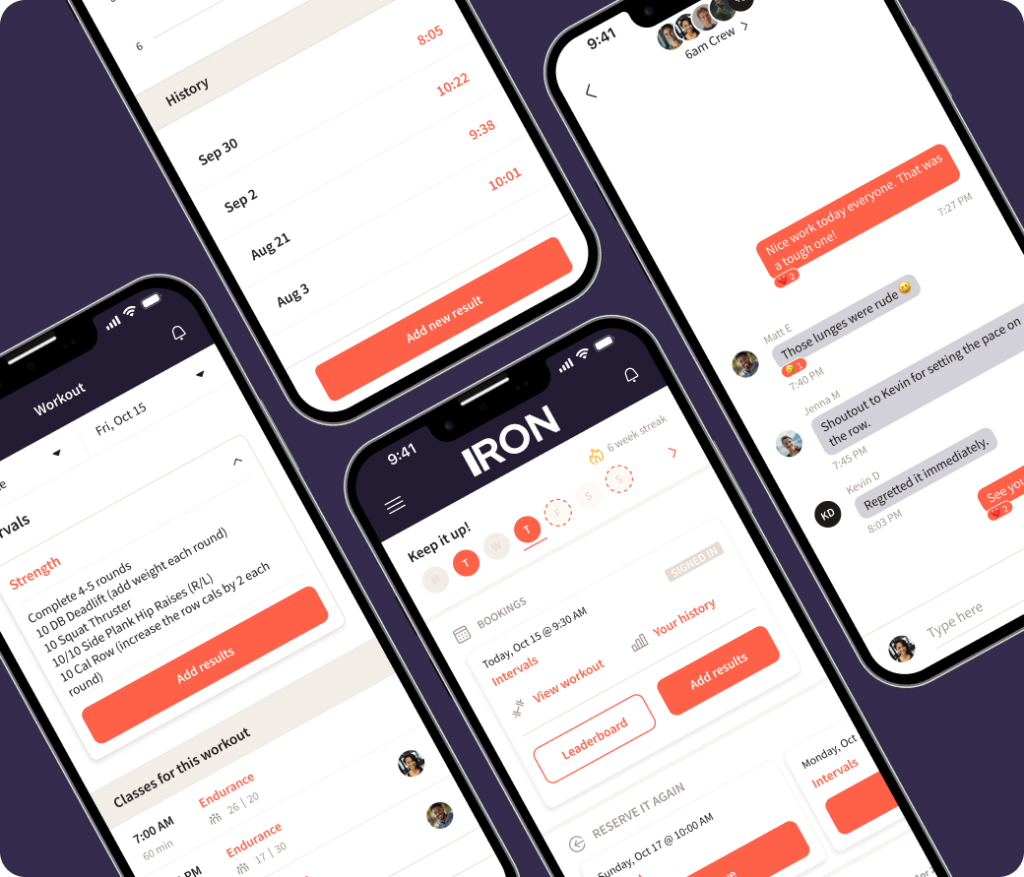
Your client app is often the first impression and most frequent interaction your members have with your business. Test the booking flow for ease and speed. Can clients manage their accounts, update payment methods, track attendance, make purchases, and receive timely push notifications?
For performance-driven gyms, can members log workouts and monitor progress through the app?
A custom-branded mobile app can elevate your client experience by reinforcing your brand consistently, though availability and costs vary.
The best platforms make these interactions feel effortless, masking the complexity behind the scenes.
Client management isn’t just about storing contact info. Rich profiles include attendance, payments, memberships, communications, purchases, and engagement insights.
A strong system helps your team act on this data—spotting members who stopped attending, flagging failed payments, and tracking lead follow-up.
Ultimately, client management should empower action, not just collect data.
Marketing automation is more than a buzzword. Look for platforms that can automatically follow up with new leads, send appointment reminders, re-engage inactive clients, and nurture trial members.
The most effective tools replace repetitive manual outreach and connect communications to real client behaviors.
While email and SMS marketing are valuable, the real advantage is automating workflows without juggling multiple third-party apps.
Payment processing costs often outweigh your monthly subscription fees. Get clear on credit card rates, ACH options, chargeback fees, hardware costs, payout timing, and any other transaction charges.
Ask if integrated payments are mandatory or if you can use your preferred processor.
Some businesses prefer all-in-one payment and membership management for easier reconciliation; others value flexibility. Ask about flexibility for advancing funds to free up cash flow from your receivables.
Not every staff member needs full access. Coaches may require class rosters and performance data, front desk staff need client accounts and sales tools, managers want reports, and owners need full visibility.
Ensure the software supports granular permission settings, especially if you operate multiple locations. Good staff management protects sensitive info without blocking essential workflows.
Retail can be a meaningful revenue stream. If you sell merchandise, supplements, or gear, check how the system handles point-of-sale transactions and inventory.
Can purchases link to client accounts? Can staff monitor stock? Can members buy through the app? Does the platform support memberships and retail sales without forcing separate payment processes?
This might be a minor feature for some but a critical one for others.
Hybrid and virtual offerings have become more common. If on-demand or live virtual classes are central to your business, evaluate video hosting quality, access controls, mobile experience, and how content integrates with memberships.
If remote training is rare for your members, don’t let flashy video features distract you from core operational needs.
Choosing a better platform is just the first step. The real challenge lies in making the transition smoothly.
Upgrading your gym software impacts every aspect of your business from client records and memberships to schedules, payment data, staff access, and online booking. A thoughtful onboarding process is essential to minimize disruptions.
Before you make the leap, take a thorough inventory of what needs to move. This could include client profiles, memberships, payment info, attendance history, upcoming bookings, staff accounts, waivers, contracts, lead data, product inventory, and workout or performance logs.
Not every platform supports migrating all data types. Clarify what transfers automatically, what requires manual effort, and what should be archived or exported ahead of time.
Keeping recurring billing seamless is critical. Payment data migration is one of the most sensitive parts of any switch.
Because credit card details are protected, they can’t simply be exported as files. Instead, payment credentials are managed securely through PCI-compliant tokenization with payment processors.
Ask your new provider if existing payment tokens can be transferred, which processors are supported, and whether clients will need to re-enter payment details. Don’t schedule your migration until you have a clear answer.
Migration isn’t an IT project happening behind the scenes—it touches your front desk, coaches, managers, and clients.
Prepare by setting up your class schedules, configuring memberships and pricing, assigning staff permissions, and thoroughly testing online booking and payment flows before going live.
Train your team on the new system and communicate changes clearly to your clients.
While responsive support is invaluable during this phase, your business needs a detailed, realistic transition plan to keep things running smoothly.
Customer support often becomes the most critical feature once you’re live.
During demos, dig into how support works. Is help available by phone, chat, or email? Are onboarding specialists involved? Will someone assist with configuration? What happens if you encounter payment issues outside regular hours? Is support included or limited by plan?
Some providers lean heavily on self-service documentation, while others offer hands-on guidance. Choose the approach that best suits your team’s needs and comfort level.
There are many software options for running a fitness business. Of all the Mindbody alternatives covered, Wodify is a strong choice for gyms and studios that want to bring scheduling, membership management, marketing automation, and performance tracking into one platform.
Wodify is designed for founder-led fitness businesses that want fewer disconnected tools and more support for the way they actually operate. Its combination of business management, client engagement, and fitness-specific features can help owners spend less time managing software and more time building their community.
Ready to learn more? Schedule a demo to see whether Wodify is the right gym management software for your business.
Common Mindbody alternatives include Wodify, PushPress, Zen Planner, and WellnessLiving. Other options such as Glofox and Momence may fit certain boutique or multi-location fitness businesses. Compare scheduling, payments, member management, and support before choosing.
Wodify is a strong Mindbody alternative for fitness businesses that want operations and client performance in one platform. It supports class scheduling, payments, client management, and automated workflows. It also includes workout programming and performance tracking for fitness businesses that need deeper engagement tools.
Start with class scheduling, online booking, payment processing, and membership management. Then compare marketing automation, client tracking, staff management, and reporting. Performance-focused gyms should also evaluate workout programming and performance tracking.
Start with the problems you want the new software to solve. Compare scheduling, payments, memberships, client management, and customer support across each platform. Then weigh secondary needs such as marketing automation, reporting, and performance tracking.
Norem ipsum dolor sit amet, consectetur adipiscing elit. Etiam eu turpis molestie, dictum est a, mattis tellus.
Already know which provider you want to select?
Click “Sign up Now” to lock in your choice and pick your start date. It’s quick and easy!
Looking for a bit more information or guidance? Click “Talk to Us” to arrange a call with us. We’ll help you find the perfect program tailored to your needs.
Norem ipsum dolor sit amet, consectetur adipiscing elit. Etiam eu turpis molestie, dictum est a, mattis tellus.
Norem ipsum dolor sit amet, consectetur adipiscing elit. Etiam eu turpis molestie, dictum est a, mattis tellus. Sed dignissim, metus nec accumsan.
Norem ipsum dolor sit amet, consectetur adipiscing elit. Etiam eu turpis molestie, dictum est a, mattis tellus. Sed dignissim, metus nec accumsan.
We’ll let you try Wodify for yourself and get a feel for what it can do for your business. A Wodify rep — a real person — will walk you through every feature.




"Wodify transformed how we run the gym. I now have more time to focus on growing my business and helping members thrive."Dana Bradley, Owner of Westside Fitness
Click “Talk to Us” to arrange a call so we can discuss the flexible access options that best fit your facility.
Click “Book a Demo” to learn more about how Wodify can help your business grow.
Your branded app is one conversation away. Click “Talk to Us” and our team will walk you through everything you need to get started.
Click “Book a Demo” to learn more about how Wodify can help your business grow.