


Try the #1 software for $1/month.
Norem ipsum dolor sit amet, consectetur adipiscing elit. Etiam eu turpis molestie, dictum est a, mattis tellus. Sed dignissim, metus nec accumsan.

Jiu-Jitsu
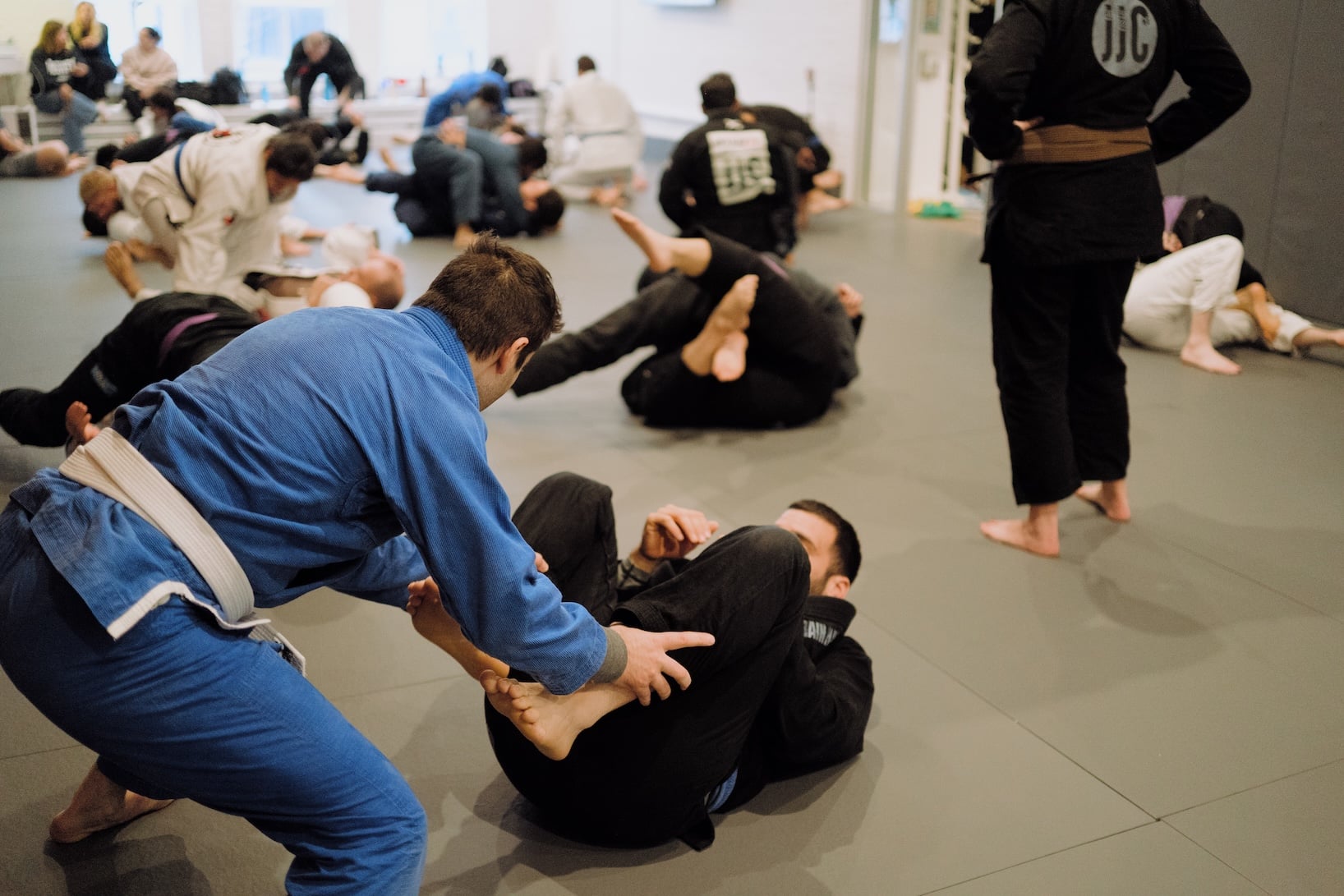
You know what you charge for a monthly membership. You also know the amount of your rent payment and what you’re paying your coaches. But do you know exactly what you’re paying yourself per hour? Or how it stacks up against what other Jiu-Jitsu school owners are making?
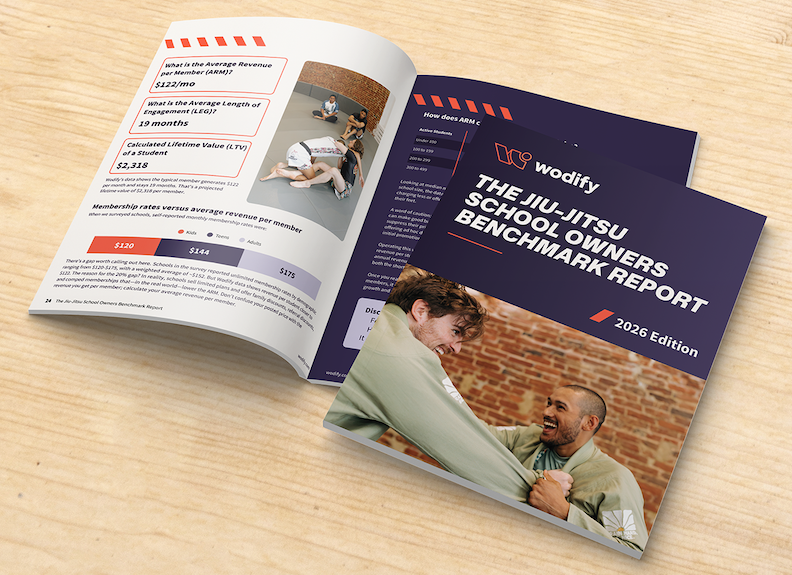
We did the research to give you that number, and a lot of others, in the 2026 Jiu-Jitsu School Owners Benchmark Report. It’s built from a survey of hundreds of school owners across the US and Canada plus real operational data from schools running on Wodify. One of the more interesting findings is that owner pay doesn’t rise smoothly with school growth. In fact, it dips hard in the middle before it pays off. And knowing where your school sits on that curve changes how you can plan the next 12 months and beyond.
The median school owner paid themselves a $62,500 salary in 2025. Once you add back the profit they kept in the business, that number climbs to roughly $100,000 in total take-home. Owners who work with a business coach or mentor do better still, landing at a median of $112,500. And that gap comes from a more profitable business, not a bigger salary.
Broken into an hourly rate, the median owner is making about $29 per hour on salary alone. Which happens to be almost identical to what the typical school pays its instructors. Once profit is folded in, that effective rate rises to $48 per hour.
But that’s just the start. Where it gets interesting is what happens when you break what a school owner gets paid in correlation to how many students the school has.
Want to see where your school lands? Download the free 2026 Jiu-Jitsu School Owners Benchmark Report for the full breakdown of owner pay, revenue, and profitability by school size.
Take a look at the middle row of the chart below. Jiu-Jitsu school owners that have 100 to 199 students work the most hours of any group and get paid the least per hour to do it. Their median total compensation actually reaches $100,000, which sounds fine on paper. But it took 50 hours per week to get there. Compare that to an owner running a school under 100 students, working 30 hours a week at $40 per hour. That means on an hourly basis, the smaller school owner is coming out ahead.
| Under 100 students | $40 | 30 |
| 100 to 199 students | $33 | 50 |
| 200 or more students | $106 | 40 |
Structurally, here’s what’s happening. At under 100 students, the owner is still teaching most classes and running the business solo. Which means the hours and the pay roughly match the size of the operation. Once a school crosses 100 students, the owner is usually still teaching, but now they’re also managing staff, leads, marketing, and admin on top of it. At this point, there isn’t quite enough revenue yet to hire the support that would take that off their plate, so the hours climb and the effective pay rate drops.
Something shifts once a school reaches 200+ students. The median revenue jumps to $212,500 and hours actually drop back down to 40 per week. The result is the effective hourly rate more than triples to $106. Schools at this size typically have a solid system for instructor coverage in place, so the owner isn’s the only one leading classes. Plus, systems also exist for day-to-day school management, so the owner isn’t pulled in to answer every question or oversee every task.
Note that this change isn’t about 200 students as an arbitrary number. It’s simply correlated to having enough revenue that Jiu-Jitsu school owners can pay staff while finally being able to step back from doing everything themselves.
If you’re currently in that 100-to-199-student range, the data points to a couple areas to focus on.
First, Jiu-Jitsu academy retention matters more than almost anything else. Schools in the top quarter for retention are projecting close to five times the lifetime value per member compared to the median school. In other words, retention is actually a bigger lever than pricing. A member who stays an extra year is worth more to your business than most price increases.

Second, lead conversion is the other important lever. High-converting schools pull a quarter of their leads from student referrals. Meanwhile, low-converting schools get only a tenth, and referrals cost nothing to run. Intro offers matter too: 67% of low-converting schools are still relying on a single free class, while high-converting schools are running multi-class trials or a paid intros instead.
Note that these two levers won’t shrinks the hours overnight for Jiu-Jitsu school owners. But tightening retention and conversion can get your school to 200-plus students faster, where the pay rate finally catches up to the effort.
See the full retention, conversion, and revenue benchmarks: Download the 2026 Jiu-Jitsu School Owners Benchmark Report and find out exactly where your school stacks up against hundreds of others.
If your Jiu-Jitsu school currently has between 100 and 199 students and you’re feeling the strain, data shows there’s a reason. You’re in the hardest stage of running a school profitably. But the good news is it’s temporary if you’re focused on the right levers.
The full benchmark report has the rest of the numbers, including revenue by school size, retention and lifetime value benchmarks, lead conversion data, and more, all pulled from hundreds of real Jiu-Jitsu schools.
Ready to see how your school compares? Download the free 2026 Jiu-Jitsu School Owners Benchmark Report and get the complete data set for your business.
—
More reading: Want to show up higher in search results simply by focusing on a few key local SEO tactics? Check out Jiu-Jitsu Academies Local SEO: How to Rank Higher in ‘Near Me’ Searches.
Norem ipsum dolor sit amet, consectetur adipiscing elit. Etiam eu turpis molestie, dictum est a, mattis tellus.
Already know which provider you want to select?
Click “Sign up Now” to lock in your choice and pick your start date. It’s quick and easy!
Looking for a bit more information or guidance? Click “Talk to Us” to arrange a call with us. We’ll help you find the perfect program tailored to your needs.
Norem ipsum dolor sit amet, consectetur adipiscing elit. Etiam eu turpis molestie, dictum est a, mattis tellus.
Norem ipsum dolor sit amet, consectetur adipiscing elit. Etiam eu turpis molestie, dictum est a, mattis tellus. Sed dignissim, metus nec accumsan.
Norem ipsum dolor sit amet, consectetur adipiscing elit. Etiam eu turpis molestie, dictum est a, mattis tellus. Sed dignissim, metus nec accumsan.
We’ll let you try Wodify for yourself and get a feel for what it can do for your business. A Wodify rep — a real person — will walk you through every feature.




"Wodify transformed how we run the gym. I now have more time to focus on growing my business and helping members thrive."Dana Bradley, Owner of Westside Fitness
Click “Talk to Us” to arrange a call so we can discuss the flexible access options that best fit your facility.
Click “Book a Demo” to learn more about how Wodify can help your business grow.
Your branded app is one conversation away. Click “Talk to Us” and our team will walk you through everything you need to get started.
Click “Book a Demo” to learn more about how Wodify can help your business grow.