

Try the #1 software for $1/month.
Norem ipsum dolor sit amet, consectetur adipiscing elit. Etiam eu turpis molestie, dictum est a, mattis tellus. Sed dignissim, metus nec accumsan.

CrossFit
The CrossFit Games are heading back to California this year. And with the celebration comes 20 years of history and fun memories. The very first Games happened in 2007 on a ranch in Aromas, California. Hay bales provided seating for a few hundred people who had no idea they were watching the start of something special.
Twenty years later, the CrossFit Games will take place at the SAP Center in San Jose on July 24-26. To mark the milestone, the weekend will consist of 20 scored events across four days.
If you consider yourself an OG, this one’s for you. Here are 20 things to help you take a walk down memory lane.
Whether you’re an OG or just started doing CrossFit recently, you know that the CrossFit Games is just one part of what sets this sport apart. Everyone has always been welcome, but things look a little different these days. Here’s a glimpse into what the early days looked like.
Long before “boutique fitness” was even a phrase, CrossFit started in garage gyms and warehouses called “boxes.” No one had AC. Some had heat. Getting uncomfortable was a badge of honor.
The CrossFit.com homepage was the place to find the following day’s workout. You might not be an OG if you didn’t feverishly hit refresh to find out what you were in for. And half the fun was reading the comments under each day’s workout from other CrossFitters once they completed it. To this day, you can still find CrossFit Games competitors’ comments on there.
The Girls needed no introductions, as each benchmark workout could spike your heart rate simply by thinking about doing it. Fran is probably the most iconic of them all, and comparing Fran times was (and is still) an indicator that you’re “one of us.” Someone in your gym still brings up their Fran PR unprompted, and you know exactly who it is.
Pukie the Clown was the unofficial mascot for going too hard. You’d sometimes find Pukie drawn in marker on the whiteboard. As the CrossFit culture evolved over the years, Pukie faded into the background. However, official Pukie the Clown merch reemerged at the 2022 CrossFit Games, then kept showing up through the CrossFit store, Rogue Fitness, and third-party sellers afterward.
Long before Bear Komplex knee sleeves and Frog Grips, CrossFitters had to get creative. (The Reebok partnership didn’t kick off until 2011.) Chucks were the unofficial show for lifting, and chalk was a hot commodity. These days, part of CrossFit Games athletes’ income comes from equipment or apparel partnerships and sponsorships.
In the early days, there were parts of the CrossFit culture that seemed crazy to outsiders. But OGs were finding that there was something to the methodology. The results spoke for themselves, so skeptics only served to tighten the community more.
Before “macros” became a buzzword for Instagram influencers, CrossFitters were weighing chicken breasts on food scales to complete their blocks. Little Zone Diet cards lived on refrigerators and nutrition was one of the initial differentiators that CrossFit was more than just a workout. Oh, and Robb Wolf’s Paleo Solution Podcast was playing in the background.
Rhabdomyolysis was (and still is) a real training risk from pushing the body past its limits. And in the early days, you didn’t have to be a CrossFit Games athlete to be susceptible to it. But that didn’t stop the “Uncle Rhabdo” dark humor from entering the chat on a regular basis.
The CrossFit Journal was actually started in 2002 by CrossFit’s original owner, Greg Glassman. Covering everything from fitness information to nutritional advice, the long-form articles were read on laptop screens because a mobile format wasn’t available yet. The OGs probably even printed a few.
Despite CrossFit promoting the importance of strict pull-up strength before learning to kip, critics insisted that a kipping pull-up was not a real one. Further, the kip itself was not a CrossFit invention. The truth is, gymnasts and rock climbers have been using kipping motions for decades. But defending the kip almost became one of the nine foundational movements for CrossFitters over the years.
Back in the day, if there was a fitness business spectrum, CrossFit boxes and “big box” gyms would be on opposite ends. Gyms that had rows of cardio equipment, weight machines, and mirrors got one label. And these businesses being labeled a “globo gym” definitely wasn’t a compliment.
Hero WODs aren’t just harder-than-normal workouts, but instead a powerful part of the CrossFit culture. Murph, named for Lt. Michael Murphy, who was killed in the line of duty in Afghanistan in 2005, is perhaps the most iconic of the hero WODs. Every CrossFitter knows the workout and the significance behind it.
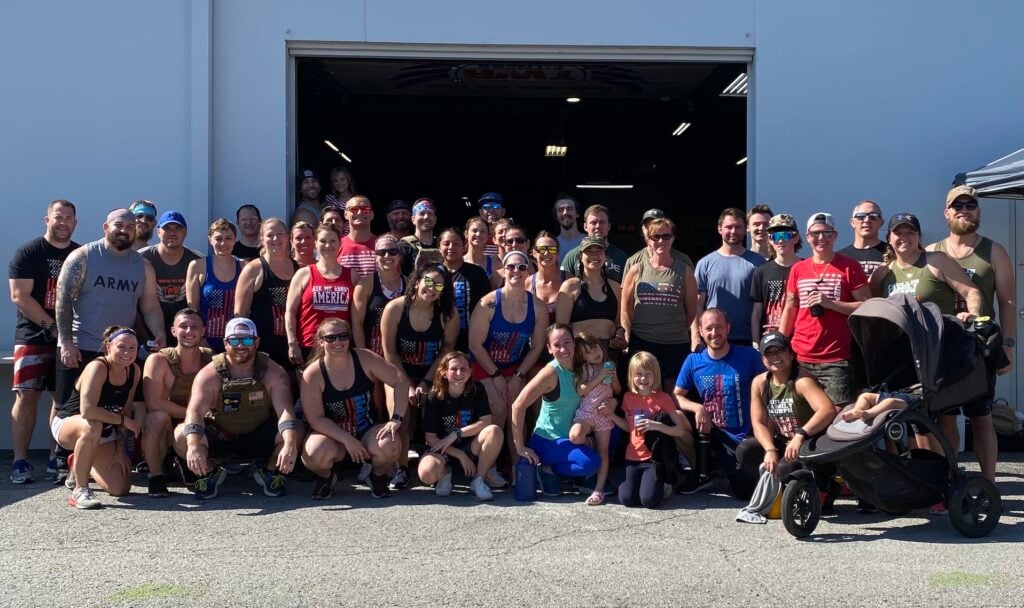
You didn’t have to have dreams of coaching classes or opening a gym to want to brag about earning your L1. The OGs will remember what those certification weekends looked like: small groups of people in uncomfortable folding chairs in a random affiliate, with instructors who’d trained under the earliest CrossFit staff.
The CrossFit Total was one of the first standardized benchmarks in the sport, consisting of a max squat, max strict press, and max deadlift. Weights are added together to create the total (which also happens to be one of the events at the 2026 CrossFit Games).
One of the things that sets CrossFitters apart from other fitness enthusiasts is the consistent desire to compete, whether against others or themselves. Local comps provide an outlet to scratch that itch in between officially sanctioned events. And in-house comps are a great way for the 5:30am class to work out with the 5:30pm class.
Sometimes, finding the CrossFit box you were dropping in at was an adventure in itself. But when you walked in the door, it was like being welcomed in your secret society. Being a CrossFitter made you “one of us,” no matter what city you were from or visiting.
Now that we can picture the background and culture of CrossFit, let’s go back to the first CrossFit Games and the journey that followed.
No one could have pictured the evolution that was to come over the next 20 years. Here are five moments that changed the sport:
During the inaugural Games in 2007, there was no jumbotron, no live stream to refresh on your phone. Just a few hundred people sitting on hay bales that looked more like a county fair strongman contest than the produced show it is now, and that was part of the charm. The workouts were created on the spot by pulling movement-labeled balls out of “the hopper.” James FitzGerald and Jolie Gentry won the very first titles.
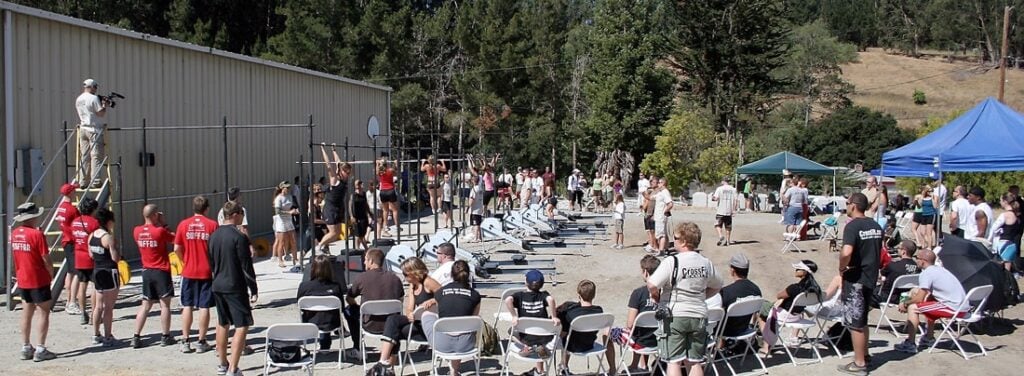
Before The Open was introduced in 2011, the road to the Games looked a lot different. In 2007-2008, you just showed up to compete at the CrossFit Games. Regionals were introduced in 2009, followed by Sectionals in 2010. But in 2011, The CrossFit Open replaced the whole system, letting anyone anywhere try to qualify, with scores posted online as the first step in trying to make it to The Games.
The OG conversation is never complete without the mention of Rich Froning. He was the first one to win four straight individual titles before moving to team competition with CrossFit Mayhem. Froning kept winning there too, contributing to his reputation as one of the most accomplished athletes the sport has ever seen.
In February 2021, Mat Fraser sent shockwaves through the CrossFit community when he announced his retirement. The announcement came after winning the title of “Fittest on Earth” for five years in a row from 2016-2020. CrossFit’s own website still refers to him as the fittest man in the sport’s history.
When Tia-Clair Toomey won her first CrossFit Games in 2017, no one could have anticipated the streak she was starting. Missing only the 2023 event for pregnancy, she won every Games attempt along the way, including last year in 2025. Eight individual titles is more than anyone else, male or female, has ever won. She is currently expecting her second child and will not be competing at the 2026 Games.
When looking at the list above, some of it sounds crazy or even made up. But a lot of the culture has withstood the test of time and still exists today. That’s one of the things that makes CrossFit (and the CrossFit Games) so unique.
But the one thing that’s never changed, whether in a garage, a box, or a modern-day CrossFit affiliate, is the community. Some members remember wearing Chucks, joking about rhabdo, and checking the CrossFit.com website for the WOD. Other members are CrossFit beginners and just getting started. Don’t worry, they’ll soon be hooked on “the Kool-Aid.”
Twenty years after its inception, CrossFit looks a little different. But the history and the stories are part of what makes CrossFit what it is. It’s not just another workout. And the community is ultimately the best tool for retention and affiliate growth out there.
Here’s to twenty years of the CrossFit Games, and to everyone who was there before it ever needed an introduction.
Norem ipsum dolor sit amet, consectetur adipiscing elit. Etiam eu turpis molestie, dictum est a, mattis tellus.
Already know which provider you want to select?
Click “Sign up Now” to lock in your choice and pick your start date. It’s quick and easy!
Looking for a bit more information or guidance? Click “Talk to Us” to arrange a call with us. We’ll help you find the perfect program tailored to your needs.
Norem ipsum dolor sit amet, consectetur adipiscing elit. Etiam eu turpis molestie, dictum est a, mattis tellus.
Norem ipsum dolor sit amet, consectetur adipiscing elit. Etiam eu turpis molestie, dictum est a, mattis tellus. Sed dignissim, metus nec accumsan.
Norem ipsum dolor sit amet, consectetur adipiscing elit. Etiam eu turpis molestie, dictum est a, mattis tellus. Sed dignissim, metus nec accumsan.
We’ll let you try Wodify for yourself and get a feel for what it can do for your business. A Wodify rep — a real person — will walk you through every feature.



"Wodify transformed how we run the gym. I now have more time to focus on growing my business and helping members thrive."Dana Bradley, Owner of Westside Fitness
Click “Talk to Us” to arrange a call so we can discuss the flexible access options that best fit your facility.
Click “Book a Demo” to learn more about how Wodify can help your business grow.
Your branded app is one conversation away. Click “Talk to Us” and our team will walk you through everything you need to get started.
Click “Book a Demo” to learn more about how Wodify can help your business grow.