



Try the #1 software for $1/month.
Norem ipsum dolor sit amet, consectetur adipiscing elit. Etiam eu turpis molestie, dictum est a, mattis tellus. Sed dignissim, metus nec accumsan.

Martial Arts School Management
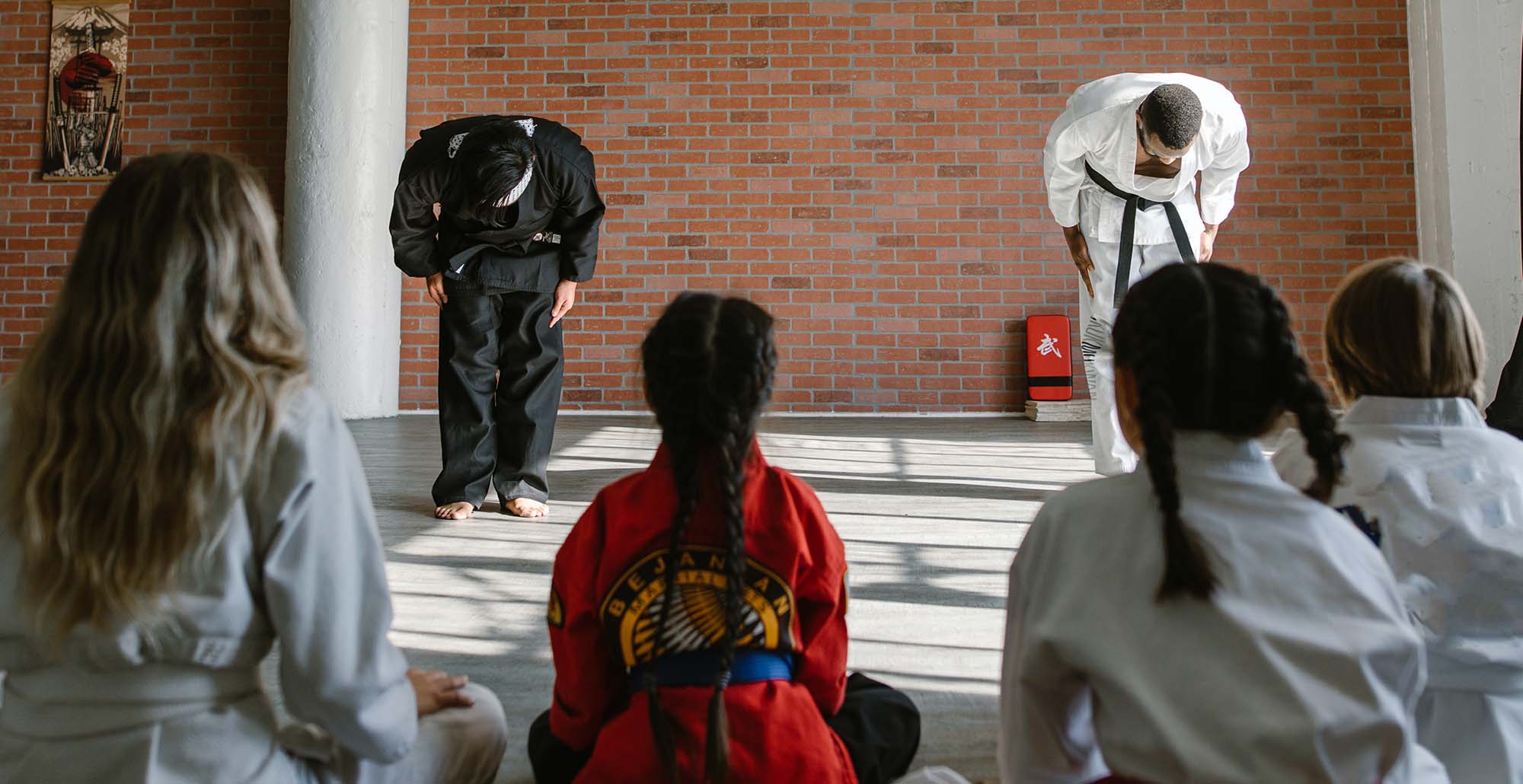
The Brazilian Jiu-Jitsu (BJJ) belt system is one of the longest and most respected ranking structures in martial arts. While some disciplines award black belts within a few years, most BJJ practitioners spend 8 to 12 years progressing from white belt to black belt.
The belts in BJJ represent years of hard work. Every promotion is earned on the mats. It takes a long time to progress. Practitioners face physical and mental tests daily. The adult BJJ belt order shows true dedication.
It is a path of personal growth. Other martial arts have faster promotion paths; you can get a black belt relatively quickly in some styles, but not BJJ.
It is a true test of character and skill. This guide explains the belt order, promotion timelines, stripes, and what students can expect at each stage of the journey.
Own a Jiu-Jitsu academy? Be sure to check our guide to growing your BJJ studio.
The adult BJJ belt order has five primary jiu‑jitsu belt ranks. Each stage has specific technical demands and age rules. The journey through the jiu‑jitsu belt system usually requires years of dedicated training.
This is your starting point on the mats, the entry point for all new Brazilian Jiu‑Jitsu students. As a white belt, your main focus is survival. You spend hundreds of hours stuck in bad positions.
You learn to escape under pressure. You drill fundamental techniques tied to escapes, holds, positioning, and survival. You repeat basic moves until your reactions get sharper. Higher‑ranked partners will often tap you out.
Most practitioners spend roughly 1.5 to 3 years at white belt before earning a blue belt, though timelines vary by academy, instructor standards, and training frequency.
The blue belt BJJ rank is a major milestone. The International Brazilian Jiu‑Jitsu Federation (IBJJF) sets formal time‑in‑grade and age requirements. This group is the main sanctioning body behind many competition rules.
You must be at least 16 years old to receive a blue belt, while younger students move through youth belts. The IBJJF recommends a minimum of two years at the blue belt level before you are eligible for the next belt rank. In practice, many students spend more time at this rank. Blue belts often spend three years or more here. This phase is about building a technical library as you work toward your next belt. You develop your first guard systems.
Many students quit at blue belt. This is a known trend in the community, and practitioners often stall here before reaching purple. People call it the blue belt blues.
To beat this, focus on small goals. Work on your guard recovery. Play with different sweeps, sharpen more advanced techniques, and build the timing needed for purple, the first advanced rank.
At purple belt BJJ, you find your identity. At this belt, you begin developing a personal style. Advanced transitions become your focus.
The minimum age for this rank is 16. The IBJJF recommends 18 months at purple belt. Purple belts usually spend roughly 1.5 to 3 years here before moving to the brown belt level, the next major stage, where practitioners consolidate a broad understanding of BJJ positions.
This is a period of deep experimentation, and many see it as the first advanced rank in BJJ. You connect different guard passes and submissions. Your movement becomes more fluid and sharp.
You may begin to help lower‑ranked students. You assist white belts with their defense. This teaching helps refine your own skills and prepares you for more advanced techniques.
You see the game with a deeper understanding of techniques. Your own game starts to reflect your body type. You use timing more than strength.
The brown belt level in BJJ is about refinement. You apply strong positional pressure on your opponents. Top control and positional dominance are the main weapons.
You use expert mechanics to dominate. The minimum age for this rank is 18. Brown belts are expected to have a broad understanding of BJJ positions and to have spent at least 1.5 years at purple belt per IBJJF guidelines.
You patch remaining holes in your defense. At this stage, you typically spend at least 1 year refining your techniques and developing your personal style before moving on to the black belt.
Your game is tighter and heavier. You know your favorite submissions well. You can spot openings more quickly.
You mentor younger students and are expected to help lower belts. You are preparing for the next belt, the BJJ black belt.
The BJJ black belt represents deep mastery, and earning it often means becoming a teacher and a guide. The minimum age for this rank is 19.
You develop a deep understanding of the fine details of every movement and a broad knowledge of the art. You help others grow on the mats. Reaching this level is widely regarded as a milestone achievement.
There’s a famous saying in BJJ, “A black belt is a white belt who never quits.” That is, a black belt rank is a new beginning, not an endpoint.
You continue to learn every day, refining techniques even after promotion. The sport keeps evolving, and reaching this rank does not mark the end of progression in the jiu‑jitsu world. Many community‑based estimates suggest that it takes roughly 8 to 12 years of consistent training to reach black belt, depending on frequency, age, and competition involvement.
Gym owners often use martial arts management software like Wodify to track attendance, belt progressions, and student milestones in one place.
You can track graduation readiness easily. Your students will always know their standing.
The table below summarizes the five main adult BJJ belt levels, their typical roles in the journey, and their relationship to competition and teaching. This reinforces the timelines and expectations covered earlier in the article.
| Belt Color | Typical focus | Approx. timeline | Key expectations | Notes |
| White | Survival and fundamentals | First 1.5 to 3 years of training | Learn basic escapes, positions, and mechanics; survive on the mat | Often, the longest plateaus are the foundation for all other belts |
| Blue | Building a technical base | 1–3+ years after white (often 2–3 years total) | Solid understanding of major positions; start of guard systems | “Blue belt blues” is common; many students quit here |
| Purple | Developing a style | 1.5–3+ years after blue | Advanced transitions, personalized attacks and defenses; support for lower belts | Often seen as the first advanced rank, more creativity and experimentation |
| Brown | Refinement and pressure | 1–2+ years after purple | Tight, high‑pressure game; strong defense; mentor lower‑ranked students | Preparation for black belt: highly technical and consistent |
| Black | Mastery and teaching | Roughly 8–12+ years from white for many | Deep positional understanding; ability to teach and adapt; long‑term consistency | A black belt is a new beginning; promotion is rare and highly respected |
This table does not replace federation rules (such as IBJJF minimum ages and time‑in‑grade requirements). Still, it helps students and owners visualize the progression and the expectations at each belt.
The BJJ stripe system shows progress between belts. Instructors use a stripe‑based system that involves earning stripes toward the next belt rank. Under IBJJF‑aligned conventions, up to four stripes can be added to a belt before a student may be considered for promotion, though academy practices can vary.
They keep students motivated during long plateaus. Each stripe is a sign of technical and conceptual progress, as well as grappling performance, so progress can be recognized even if a student is not the strongest fighter. Coaches use them to recognize small improvements.
Stripes provide a sense of direction. They show that your hard work is noticed. This keeps students coming back to class.
For school owners, this means better student retention. Happy students stay registered for longer periods. Your business grows as your students progress when you apply structured martial arts business growth strategies.
On a black belt, stripes are often called degrees. The stripes on the black belt represent years of active work. You must teach and train consistently.
The first three degrees usually require three years each. Subsequent degrees require even more time. It is a slow and steady process.
After the black belt, there are rare ranks.
Coaches used to track these details on paper. Paper charts get lost or damaged. In fact, when evaluating martial arts software, you’ll find that many offer a structured way through CRM-like functionality to log student progression.
The road to the black belt is long. Many people wonder how long it takes to get a blue belt. The answer depends on consistency, training frequency, age, and lifestyle. Most practitioners earn a blue belt after roughly 1.5 to 3 years of consistent training, though timelines vary significantly by academy, training frequency, and instructor standards.
Data from community surveys and BJJ‑focused outlets indicate steep attrition.
For example, BJJ Analytics’ belt‑statistics dashboard reports that roughly 75% of white belts quit before reaching blue belt, while other coverage from outlets like Jiu‑Jitsu Haus estimates that only about 1–3% of all practitioners ever earn a black belt. These figures should be treated as community‑based estimates that reflect common patterns.
Reaching a black belt often takes around 8 to 12 years of consistent training, though some practitioners take longer depending on their schedules and competition involvement. These timelines are not hard rules, but they reflect what many instructors observe in practice.
Only a small fraction ever earns a black belt, underscoring how elite the rank is in practice.
This journey is rare and hard. It requires a deep, long‑term commitment.
Gym owners must build strong school structures. Wodify provides operational guides to assist academy owners, and following the three steps to grow your Jiu‑Jitsu gym can support that foundation. You can read our resource on how to open a BJJ academy.
It will help you scale your business properly. You can design a better student experience. This keeps your members training longer.
Brazilian Jiu‑Jitsu is different from other martial arts. Instead of formal written tests or standardized exams, there is rarely a fixed curriculum exam.
Instead, instructors assess your live rolling capabilities, and belt promotions are usually based on technical knowledge, practical sparring ability, and overall mat time rather than a rigid test. They watch you spar against higher ranks. They look at how often you show up and how you apply techniques under pressure.
Consistency is a major part of BJJ promotion criteria. Instructors also evaluate your attitude and respect. They want to see how you treat others and how you handle defeat on the mats. This is how BJJ belts are promoted in most schools. It is a highly personal evaluation.
Do all BJJ schools use the same belt criteria? No. Criteria vary from academy to academy. Some schools closely follow IBJJF‑aligned standards, while others use academy‑specific curricula and time‑in‑grade rules. The head instructor always has the final say. This variation makes personal tracking tools necessary.
The right software should do more than track memberships. It should help coaches manage student progress, recognize milestones, and keep records organized as your academy grows.
Look for these key capabilities:
A well-organized belt-tracking system saves administrative time, reduces errors, and helps create a more consistent experience for students and coaches alike.
Many academies are moving away from manual tracking. They are replacing paper charts with digital systems. A modern BJJ graduation system uses smart tools.
“It’s going to be a lot of work up front, and then nothing will feel like work ever again.” In addition to being the Partnerships Manager at Wodify, Chris is opening his first Jiu-Jitsu academy. Follow along as he builds Meru Brazilian Jiu-Jitsu from the ground up!
The kids’ BJJ belt system is different from the adult path. It is designed for ages 4 to 15, with separate youth belt systems that prepare students for the adult ranking system. The youth belt structure keeps young students motivated.
The children’s order is white, grey, yellow, orange, and green. These are the colored belts for children ages 4 to 15, and these ranks build confidence in young athletes. They learn discipline and focus.
Each color group contains three sub‑belts. The grey group has grey‑white, solid grey, and grey‑black. These striped colors are part of the youth belt and are not part of the adult ranking system.
Kids receive rewards for their hard work sooner. It helps keep them engaged in the sport. They stay excited to learn new techniques, and owners can support this momentum with helpful strategies to grow martial arts enrollment.
At age 16, a BJJ youth‑to‑adult transition occurs into the adult ranking system. Students can move to white belt or, in some cases, blue belt based on prior rank and instructor assessment.
It also depends on their time served. Youth practitioners can earn gray, yellow, orange, and green belts before this step. The transition is a major move in their journey.
Managing these transitions can be hard for owners. You must handle complex family billing accounts. You must track different belt hierarchies.
Wodify’s martial arts management software keeps parent accounts linked. This links parent accounts directly to child rankings. The software helps academies manage youth and adult ranking systems while keeping student records organized.
Keeping rankings, attendance, and family accounts organized can save significant administrative time as your academy grows.
This belts‑in‑BJJ FAQ answers common questions. We help you understand rules and timelines. Use this information to guide your students.
The adult BJJ belt ranks are white, blue, purple, brown, and black. Beyond black, there are senior master ranks. These include red-and-black, red-and-white, and red belts.
The red belt is the highest recognized rank. It is reserved for grandmasters who have spent decades training and teaching. Only a few people ever reach this level.
Generally, you cannot skip belts. Legitimate BJJ schools do not permit skipping belt levels. The IBJJF sets strict rules for graduation.
Every practitioner must complete the recommended time‑in‑grade and age requirements. This ensures everyone earns their rank. It preserves the integrity of the sport.
Most students earn a blue belt after roughly 1.5 to 3 years of consistent training, though timelines vary by academy, instructor standards, and training frequency.
Instructors use a mix of live sparring, class attendance, technical execution, and overall knowledge level to decide promotions. Stripes can recognize technical and conceptual progress before the next belt, even when a student is not the strongest athlete. Many modern academies use Wodify belt‑progression tracking.
This tool helps coaches track attendance, mat time, and student progress in one place. This makes the graduation process clear and fair.
Youth belt systems apply to children under 16, and a youth belt is available before blue belt eligibility since the IBJJF sets the minimum blue belt age at 16. They include grey, yellow, orange, and green belts, as well as striped colors not used in the adult system. Adult belts start at white and go to black.
When youth practitioners turn 16, they transition to adult ranks. Software can help academies manage youth and adult ranking systems while keeping student records organized as students progress.
The BJJ belt system is a long road. It requires patience and hard work.
Every belt level marks real progress in the belt system, and even experienced practitioners keep advancing through post‑black‑belt ranks like the coral belt, awarded at the 7th degree after many years of active practice and teaching as a black belt. The red belt remains the highest rank, representing rare red‑belt status in the sport.
Whether you are a student or an owner, tracking progress matters. The right tools make this journey clear and organized. Focus on your training and let technology handle the rest.
Need help? Book a demo with Wodify today. See how Wodify helps simplify belt tracking, attendance management, billing, and day-to-day academy operations.
Norem ipsum dolor sit amet, consectetur adipiscing elit. Etiam eu turpis molestie, dictum est a, mattis tellus.
Already know which provider you want to select?
Click “Sign up Now” to lock in your choice and pick your start date. It’s quick and easy!
Looking for a bit more information or guidance? Click “Talk to Us” to arrange a call with us. We’ll help you find the perfect program tailored to your needs.
Norem ipsum dolor sit amet, consectetur adipiscing elit. Etiam eu turpis molestie, dictum est a, mattis tellus.
Norem ipsum dolor sit amet, consectetur adipiscing elit. Etiam eu turpis molestie, dictum est a, mattis tellus. Sed dignissim, metus nec accumsan.
Norem ipsum dolor sit amet, consectetur adipiscing elit. Etiam eu turpis molestie, dictum est a, mattis tellus. Sed dignissim, metus nec accumsan.
We’ll let you try Wodify for yourself and get a feel for what it can do for your business. A Wodify rep — a real person — will walk you through every feature.




"Wodify transformed how we run the gym. I now have more time to focus on growing my business and helping members thrive."Dana Bradley, Owner of Westside Fitness
Click “Talk to Us” to arrange a call so we can discuss the flexible access options that best fit your facility.
Click “Book a Demo” to learn more about how Wodify can help your business grow.
Your branded app is one conversation away. Click “Talk to Us” and our team will walk you through everything you need to get started.
Click “Book a Demo” to learn more about how Wodify can help your business grow.